

Retail Development Consultant
Hotel-to-Apartment Conversion Developer in the San Francisco Bay Area
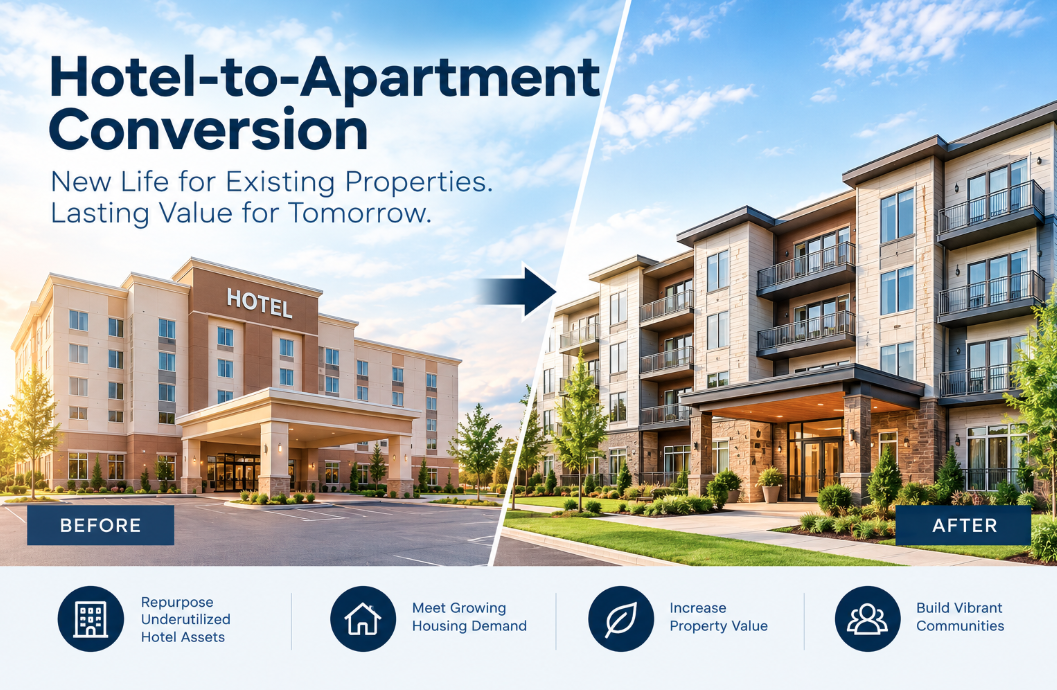
Converting an existing hotel into apartments can create a new residential opportunity while making productive use of an existing property. Converting hotels to Apartments has become an increasingly important adaptive reuse strategy as developers and communities look for ways to add housing without relying only on ground-up construction. National housing research has noted growing interest in reusing underutilized commercial buildings, including hotels, as housing opportunities.
For suitable properties, hotel conversions can offer several advantages. Guest rooms already have plumbing, electrical connections, bathrooms, corridors, elevators, and other infrastructure that may support residential reuse. However, a successful conversion requires more than an existing room layout. Zoning, building codes, design requirements, construction costs, financing, and market demand all need to be evaluated. RGQ can help owners and development partners assess whether a hotel represents a viable opportunity for apartment conversion in the San Francisco Bay Area.
Why Convert a Hotel to Apartments?
A hotel can provide an existing building framework that may reduce some of the work required in a ground-up multifamily project. Each property is different, so the actual savings in cost and time must be established through a property-specific feasibility analysis rather than a standard percentage.
One potential advantage is existing plumbing and electrical infrastructure. Hotel rooms commonly have bathrooms, water connections, electrical service, and mechanical systems already in place. Depending on the building, portions of this infrastructure may be adapted for residential use.
The existing structure can also reduce the amount of new material required compared with constructing an entirely new building. Reusing the structural shell, corridors, elevators, and other components may reduce construction waste and limit certain stages of construction.
There may also be opportunities to shorten the development timeline. However, this should not be assumed. Residential conversions can require zoning approvals, change-of-use permits, building-code upgrades, design modifications, and other reviews. California has also been actively examining ways to address barriers and opportunities for adaptive reuse residential projects.
The right question is therefore not simply whether a conversion is faster or cheaper. It is whether the existing property provides enough physical and economic advantages to justify conversion when compared with other development options.
Feasibility Considerations
Before purchasing or repositioning a hotel, developers should evaluate several factors that can determine whether a residential conversion is practical.
Zoning and change-of-use permits:
Hotel use does not automatically allow apartment use. Local zoning regulations, permitted uses, density standards, parking requirements, and entitlement procedures must be reviewed. California also has specific building standards that apply to alterations and changes involving existing hotels and residential buildings.
Life-safety code upgrades:
A Hotel Converted to Apartments may need modifications to fire protection, emergency exits, alarms, accessibility, ventilation, electrical systems, and other life-safety features. The required work depends on the existing building and proposed residential configuration.
Kitchen and plumbing retrofits:
Hotel rooms typically have bathrooms but may not have full residential kitchens. Adding kitchens, kitchenettes, additional plumbing, ventilation, or utility capacity can significantly affect the design and construction budget.
Unit configuration:
Existing guest rooms need to be evaluated for residential dimensions, natural light, ventilation, storage, kitchens, bathrooms, and other requirements. Combining rooms may create larger apartments but can also increase construction costs.
Historic designation:
Historic properties can have additional restrictions on exterior and interior alterations. Preservation requirements may affect windows, façades, entrances, floor plans, and other building elements.
Market and financial feasibility:
The local rental market, achievable rents, unit mix, operating costs, acquisition price, renovation budget, and projected value should all be reviewed before the conversion moves forward.
These factors help determine whether a hotel should become apartments, continue operating as a hotel, or be considered for another adaptive reuse strategy.
Notable Hotel-to-Apartment Conversions in the Bay Area

Hotel conversions are part of a broader California adaptive reuse trend. The state has supported programs that allow qualifying hotel and motel properties to be acquired, rehabilitated, and converted into housing. California's Department of Housing and Community Development has documented numerous hotel and motel conversion projects through its housing programs.
California has also documented examples of adaptive reuse beyond supportive housing. The Wineman Hotel in San Luis Obispo, for example, was adaptively reused as affordable micro and studio housing while retaining historic elements of the property.
In the Bay Area, conversion opportunities should be assessed on an individual property basis. RGQ does not represent unverified hotel conversions as completed projects. Instead, the company can evaluate potential opportunities using the property's location, physical characteristics, zoning, market conditions, and development economics.
Our Hotel-to-Apartment Conversion Process
A structured development process can help identify major issues before significant capital is committed.
Acquisition & Feasibility:
The process begins with an assessment of the hotel, surrounding market, acquisition terms, existing building condition, zoning, potential unit count, residential demand, and preliminary development costs. This stage helps determine whether the property warrants further investment.
Design & Permitting:
Once the opportunity demonstrates potential, architects and consultants can develop a residential concept around the existing building. The process may involve unit layouts, kitchens, bathrooms, accessibility, fire and life-safety systems, mechanical systems, parking, and other requirements. Required zoning, building, and change-of-use approvals are also addressed.
Construction:
After approvals and financing are in place, the building can move into renovation and construction. The scope may range from targeted upgrades to substantial interior reconstruction. Existing infrastructure is evaluated throughout the process to determine what can be retained, modified, or replaced.
Lease-Up:
Once construction is complete, the property transitions into residential operations. Unit marketing, leasing, property management, tenant onboarding, and stabilization become important parts of the final stage.
This approach helps connect acquisition decisions with design, construction, financing, and long-term operating goals.
Why Partner with RGQ?
Hotel conversion requires experience with both hospitality properties and residential development. RGQ brings more than 30 years of commercial real estate experience, along with expertise relevant to hotel development, repositioning, acquisitions, and multifamily opportunities.
The firm's institutional relationships and strategic alliances can also support complex development discussions involving owners, capital partners, operators, and other stakeholders. During Robert G. Quintero's career, he and his partners owned and operated more than 4 million square feet of retail malls nationally. He has also personally negotiated more than 1.28 million square feet of leases involving major department stores and national credit tenants.
This broader multifamily development experience can help RGQ evaluate a hotel conversion from more than one perspective. The question is not only whether the building can physically become apartments, but whether the completed property can support a sound residential development strategy.
Capital planning is another important consideration. Conversion project financing should be evaluated alongside acquisition costs, construction requirements, projected rents, operating expenses, and the anticipated value of the completed residential property.
Explore a Hotel-to-Apartment Conversion Opportunity with RGQ
A hotel conversion requires careful analysis before acquisition, design, financing, and construction decisions are made. RGQ can help evaluate the property's development potential, residential strategy, market conditions, and conversion requirements. With experience across hospitality and residential development, RGQ can help owners and partners assess hotel-to-apartment opportunities in the San Francisco Bay Area. Contact RGQ Developments to discuss a potential conversion project.
Frequently Asked Questions
How long does converting a hotel to apartments take?
The timeline varies by property. Zoning, permitting, design, construction scope, historic restrictions, and financing can all affect the schedule. A feasibility study and preliminary design can provide a more realistic timeline for a specific hotel.
Is hotel conversion cheaper than new construction?
It can be, but there is no universal cost advantage. Existing structures and infrastructure may reduce certain construction requirements, while kitchens, code upgrades, accessibility improvements, and change-of-use work can add substantial costs.
What zoning approvals are required?
Requirements depend on the property's jurisdiction and existing zoning. A project may require a change of use, conditional approval, building permits, or other entitlements. Local planning and building requirements should be reviewed before acquisition.
Can every hotel be converted into apartments?
No. Building configuration, location, zoning, market demand, physical condition, parking, natural light, plumbing, life-safety requirements, and conversion costs all affect suitability.
Can financing be used for a hotel conversion?
Potentially. Financing options depend on the property, ownership structure, project economics, residential use, and available capital sources. RGQ can evaluate financing considerations as part of the broader development strategy.